How long should a modern dental unit serve a busy practice? The answer is rarely a fixed number. In many clinics, a well-maintained unit lasts approximately 10 to 15 years. Heavy patient traffic, frequent disinfection, waterline problems, and delayed repairs can shorten that period. A quieter practice may keep its equipment functional for longer, although older technology can still limit efficiency.
Dental technology educator Dr. Paul Feuerstein has emphasized, “The best technology is the technology that is used well.” His point matters when considering What is the lifespan of a modern dental unit. Longevity is not only about the chair, delivery system, or built-in scaler. It also depends on staff training, preventive maintenance, manufacturer support, and the availability of replacement parts. A loose foot control, a slow chair motor, or repeated suction failures may signal deeper wear.
Experience in dental practices shows that daily care makes a visible difference. Staff should inspect hoses, flush waterlines, disinfect contact surfaces, and record service visits. A qualified technician can identify electrical faults before they become expensive failures. Still, no maintenance plan is perfect. Even a carefully serviced unit may develop obsolete software, cracked upholstery, or unavailable components. That uncertainty deserves honest attention. This article examines practical service life, warning signs, maintenance costs, and the point when replacement becomes more sensible than repair. It also separates physical durability from clinical usefulness, because a unit can still operate while quietly slowing the entire practice.
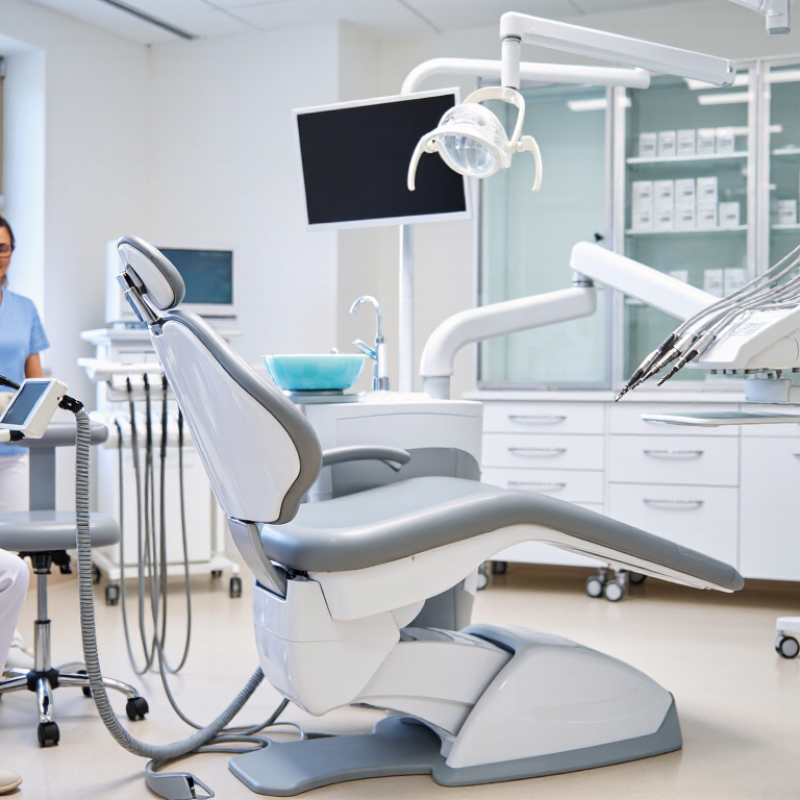
A modern dental unit is more than a patient chair. It combines the chair, delivery arm, operating light, instrument controls, suction, water system, foot control, and safety sensors. Some practices also connect imaging, monitoring, and digital charting systems. Each component ages differently.
The lifespan includes performance, hygiene, repairability, and software compatibility. A sturdy chair may remain functional for 15 years, while valves, handpiece tubing, touchscreens, and sensors may need earlier replacement. Many service professionals use a 10-to-15-year planning range. It is useful, but imperfect. Usage matters greatly.
The CDC’s Summary of Infection Prevention Practices in Dental Settings identifies dental unit waterlines as potential reservoirs for microorganisms. It references the EPA benchmark of 500 colony-forming units per milliliter for drinking water quality. Therefore, a unit with a clean-looking surface may still require waterline treatment, testing, and documented maintenance. The WHO’s 2022 Global Oral Health Status Report estimates that oral diseases affect nearly 3.5 billion people worldwide, increasing pressure on practices to maintain dependable equipment. A modern unit’s true lifespan ends when downtime, hygiene risks, unavailable parts, or incompatible controls outweigh repair value. The chair may still move. That does not mean the system remains clinically ready.
How Long Does a Modern Dental Unit Last?
A modern dental unit typically serves for 10 to 15 years. Some units remain reliable for nearly 20 years. However, service life depends on workload, maintenance, water quality, and installation conditions. A busy clinic may use one unit dozens of times daily. That level of pressure affects valves, chair motors, delivery arms, and control systems.
Regular care makes a measurable difference. Daily flushing helps reduce buildup in internal waterlines. Scheduled inspections can identify leaking hoses, worn seals, unstable foot controls, and noisy lift mechanisms. Technicians also examine electrical connections and test safety functions. Small faults are easier to repair than failed circuit boards or damaged hydraulic systems. Keep service records. They reveal patterns that memory often misses.
Usage matters more than age alone.
A ten-year-old unit with careful maintenance may outperform a newer unit that receives little attention. Still, repairs can become less practical when replacement parts are difficult to source. Outdated imaging, weak suction performance, damaged upholstery, or repeated downtime may also affect the decision. In practice, clinics should review repair costs, patient comfort, and workflow together. The exact lifespan is never guaranteed. Even well-maintained equipment can develop unexpected faults, and maintenance schedules may need adjustment after heavy use.
A modern dental unit typically provides around 10–15 years of service when professionally installed, regularly maintained, and used under normal clinical conditions. Individual component life can vary depending on workload, water quality, cleaning procedures, and replacement of wear parts.
A modern dental unit typically lasts 10 to 15 years, but the calendar tells only part of the story. A heavily used unit may age faster than one serving fewer patients. Daily inspection, correct cleaning, and prompt repairs can protect its chair, delivery system, and electronics. Maintenance teams often find that small leaks become costly when staff postpone them. It can still fail.
Water quality strongly affects internal tubing, valves, and handpiece connections. Hard water can leave mineral deposits inside narrow passages. Poorly managed treatment lines may also encourage biofilm growth. Follow the unit’s maintenance instructions, use suitable water, and record flushing routines. Disinfectant concentration matters too. Stronger is not always safer. Certain chemicals may damage upholstery, seals, or painted surfaces.
Operator habits also shape service life. Avoid pulling hoses sharply, overloading the chair, or forcing stuck controls. Keep foot pedals dry and protect exposed cables from repeated impact. Room humidity, electrical stability, and installation quality deserve attention. A qualified technician should inspect safety functions and replace worn components before failure. Keep detailed service records. They reveal recurring faults and support better repair decisions. Software support and spare-part availability can also influence the unit’s practical lifespan. A useful estimate can still be wrong when usage changes.
A modern dental unit often serves reliably for 10 to 15 years, but age alone does not decide its future. Daily workload, water quality, maintenance, and replacement-part availability matter more. A heavily used unit may fail earlier. An older, well-maintained unit may remain safe and practical.
Watch for small warnings. A chair that stops halfway, uneven handpiece pressure, weak suction, or water leaking beneath the base deserves prompt inspection. Persistent alarms are not harmless background noise. Cracked tubing, corroded fittings, stiff foot controls, and repeated electrical faults can signal deeper wear. In my experience, teams sometimes normalize these problems because treatment still continues. That is risky. Patient delays and sudden shutdowns often cost more than planned repairs.
Waterline performance requires special attention. The CDC’s Summary of Infection Prevention Practices in Dental Settings recommends dental treatment water meet the public drinking-water benchmark of no more than 500 CFU/mL of heterotrophic bacteria. Test results above that level, recurring biofilm, or failed shock treatments may justify replacing contaminated components. CDC guidance also recommends flushing lines for 20 to 30 seconds after each patient.
Repair usually makes sense when one accessible component fails and the frame, controls, and safety systems remain sound. Replacement becomes more reasonable when failures repeat, compatible parts disappear, or repair costs approach a substantial share of a new unit’s cost. I would not replace equipment merely for appearance. Still, postponing a documented safety problem is a poor economy.
A modern dental unit can serve for 10 to 15 years, but daily care often matters more than its purchase date. I have seen older units perform reliably when staff clean them consistently. I have also seen newer units develop leaks after poor maintenance. Small habits matter.
Flush waterlines at the start of each clinical day and between patients, following the unit’s instructions. The CDC recommends dental treatment water meet drinking-water standards, generally no more than 500 colony-forming units per milliliter. Test water quality regularly, especially after long shutdowns. Disinfect suction lines daily, remove traps carefully, and prevent debris from hardening inside tubing. Keep the chair dry after cleaning. Moisture accelerates corrosion around valves, hinges, and electrical connections.
Preventive servicing should include foot controls, filters, handpiece connections, lights, delivery hoses, and chair hydraulics. Record every repair with its date and symptoms. These records reveal repeated failures before they become expensive downtime. The WHO Global Oral Health Status Report 2022 highlights the pressure on dental services worldwide, making equipment reliability increasingly important. Yet maintenance schedules are sometimes copied without questioning actual usage. That is a weakness. A busy clinic may need inspections more frequently than a low-volume practice. Replace worn seals early, train every operator, and use compatible cleaning agents. Aggressive chemicals may damage surfaces while appearing effective. Personally, I would review the maintenance plan twice yearly, because real working conditions rarely match the original assumptions.
Most units serve for 10 to 15 years. Some remain reliable for nearly 20 years. The estimate is not guaranteed.
Yes. A busy clinic may operate one unit dozens of times daily. Heavy use strains chair motors, valves, control systems, and delivery arms.
Yes. A carefully maintained ten-year-old unit may outperform a neglected newer unit. Age is not everything.
Daily flushing reduces buildup in internal waterlines. Scheduled inspections can find leaking hoses, worn seals, noisy lifts, and unstable foot controls.
Hard water may leave mineral deposits inside narrow passages. Poorly managed lines may also support biofilm growth. Suitable water and recorded flushing routines are important.
Yes. Excessively strong disinfectants may harm upholstery, seals, or painted surfaces. Stronger is not always safer. Follow the unit’s maintenance instructions.
Avoid pulling hoses sharply or forcing stuck controls. Do not overload the chair. Keep foot pedals dry and protect exposed cables from repeated impacts.
Review repair costs, patient comfort, downtime, and workflow together. Difficult-to-source parts, weak suction, outdated imaging, and damaged upholstery may support replacement.
Records reveal recurring faults that memory often misses. They help technicians spot patterns and support better repair decisions. Still, records cannot predict every failure.
A modern dental unit is an integrated system that supports examination, treatment, instrument control, patient positioning, and clinical workflow. What is the lifespan of a modern dental unit? In general, a well-designed and properly maintained unit may serve reliably for approximately 10 to 15 years, although its actual working life depends on usage, construction quality, maintenance practices, operating conditions, and the availability of replacement components. Heavy daily use, poor water quality, inadequate cleaning, and delayed servicing can shorten its lifespan.
Common warning signs include recurring malfunctions, unstable chair movement, worn upholstery, leaking hoses, reduced suction, outdated controls, and difficulty obtaining compatible parts. To extend service life, dental practices should follow routine inspection schedules, clean and disinfect components correctly, check water and air systems, train staff in proper operation, and arrange professional servicing when necessary. Timely repairs and planned upgrades can improve safety, efficiency, and comfort while helping determine whether continued maintenance or full replacement is the more practical choice.

Barclay Medical